There is much to appreciate about the beauty of northeast winters, but there is
one unwelcome aspect of the season which everyone dreads: the formation of
potholes.
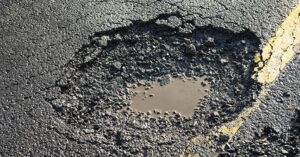
The wild ups and downs of temperature along with the precipitation that winter brings
creates the perfect conditions for potholes, which begin to form when water seeps into
the ground underneath pavement. Whenever this water freezes, it expands. This
expansion creates pressure on the ground below and on the pavement above, causing
the pavement to bulge and crack. When the ice melts, gaps are created underneath the
surface of the pavement. As this process is repeated over time, the pavement weakens
and the gaps widen. The weight of passing cars eventually deteriorates the pavement to
the point where pieces come loose and collapse. Once this happens, you have a
pothole. And once formed, any repeating of the freeze/thaw cycle can quickly turn a
small hole into a car-damaging crater.
In order to understand why these cold weather craters are so difficult to fix, it’s important
to know that there are two basic categories of asphalt used to create roadways and one
type is far superior to the other. ‘Hot mix’ is the product widely used for paving, while
‘cold mix’ is generally used for emergency winter repairs. As the name might suggest,
‘hot mix’ requires the asphalt to be delivered at very high temperatures ( approximately
275- 300 degrees). Paving should take place at ambient and ground temperatures of no
lower than 50 degrees. Add in the fact that most ‘hot mix’ asphalt plants shut down for
the winter, and you can see why it’s not a viable option for winter road repairs. That
leaves Highway Department crews across the region with the far less desirable option
of using ‘cold mix’ for winter repairs. Unfortunately, cold mix is extremely weather
sensitive, doesn’t easily bind, and has a more challenging curing process. If it gets wet
before it’s fully cured, chances are it will quickly break apart and get pushed right out of
the pothole and back onto the roadway. This is why you might see a pothole filled a few
days ago begin to form again just days later.
Another important aspect of a municipality’s ability to deal with potholes is knowing
where they are as quickly as possible. It’s extremely helpful to both drivers and the town
to repair potholes before they become large enough to cause damage. The popular
adage, “If you see something, say something” certainly applies here. However, this
brings another challenge that can create delays and confusion; knowing who is
responsible for maintaining the road where the pothole is located.
Roads in Clarkstown are maintained by either the state, the county, or the town. The
state roads are fewest in number, but are generally the most traveled and prone to
potholes. Route 9W, Route 303, Route 304, and Route 59 are state roads. County
roads are too numerous to list here, but are marked by signs with blue backgrounds and
yellow lettering containing the words Rockland County and a designated route number.
As an example, Middletown Road in Nanuet is a county road and as you drive along it,
you will see the blue and yellow signs designating the road as Rockland County 33.
Other examples of county roads include New Hempstead Road in New City and Kings
Highway in Congers/Valley Cottage. Smaller roadways, including the vast majority of
residential streets, are town roads and have no markings aside from the standard green
and white street name signs.
Once you’ve spotted a pothole and know who to notify, all it should take is a phone call
to the appropriate agency to have it reported and addressed. The Clarkstown Highway
Department has made tremendous strides in improving response times in the past few
years. Normal turnaround time from receiving a notification and getting a crew out to fix
a pothole on a town road is less than 48 hours and many are addressed by the following
business day.
To report a pothole:
Town of Clarkstown Highway Department: 1-845-623-7500 or
Rockland County Highway Department: 1-845-638-5060
NYS DOT: 1-800-POTHOLE (1-800-768-4653)
Like most of Clarkstown’s residents, I am looking forward to the spring and summer
weather ahead. Warmer temperatures create more opportunities for visiting our
beautiful town parks, enjoying nature, outdoor dining, recreation, and the remediation of
the annual winter pothole problem.